

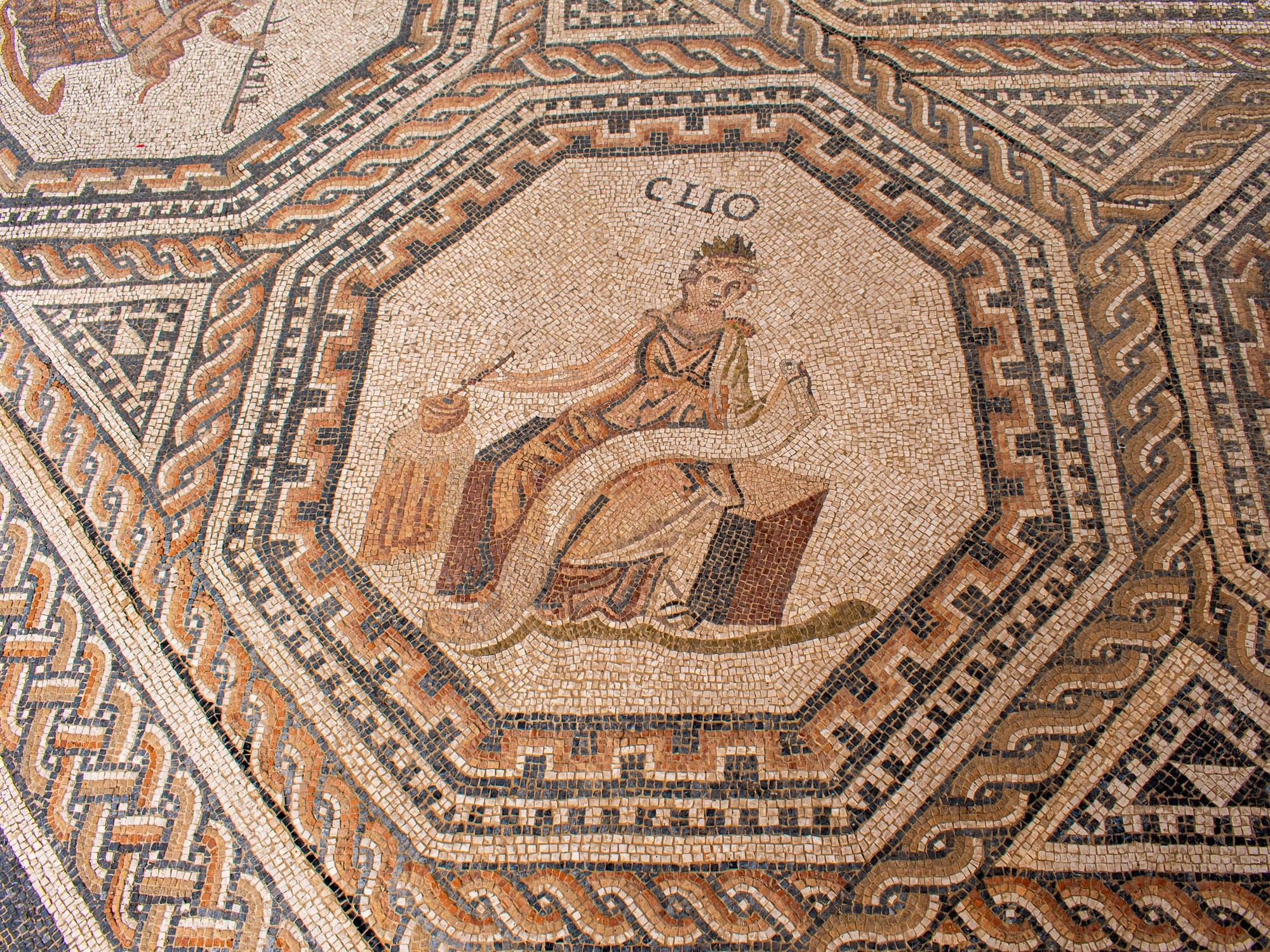
Clios was the ancient Greek muse of history, memory, and the preservation of human deeds. Her name derives from the Greek kleô, meaning “to celebrate” or “to make famous,” fitting for the figure entrusted with carrying the stories of civilizations across generations. Often depicted with a scroll, tablets, or an open book, Clio symbolizes humanity’s desire to remember itself — not merely through dates and battles, but through the meaning attached to them.
In classical tradition, Clio was one of the nine Muses, daughters of Zeus and Mnemosyne. If Mnemosyne represented memory itself, Clio represented memory organized into narrative: history transformed into identity. Ancient historians and poets invoked her before recounting wars, empires, and heroic lives, believing that history required both truth and artistry to survive.
More than a mythological figure, Clio remains a symbol for historians, archivists, and storytellers today. To invoke Clio is to believe that the past still speaks — and that remembering is an act of civilization itself.
 Paperback Dello
 Paperback Dello