
![[ SOURCES ]](https://storage.ghost.io/c/7e/56/7e5633bd-4313-42d4-9b1f-cf14fc05f342/content/images/size/w100/2026/04/281D898A-3234-43E7-9297-2302943D5349.jpeg)
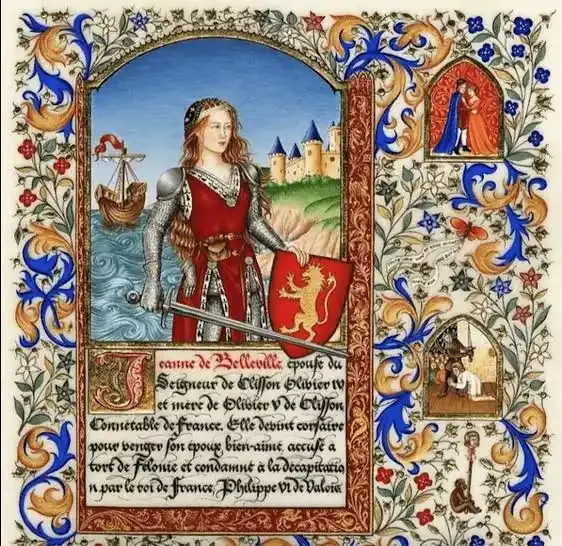
Upon the low-lying marches of Poitou, where the sluggish, silver ribbon of the river Vie winds through Belleville toward the salt-scented air of the Atlantic, Jeanne Louise de Belleville first drew breath in the year of our Lord 1300. Daughter to Maurice IV of Montaigu and Lètice de Parthenay, her early youth was framed by the dark timber of merchant hulls, the white mounds of inland salt-farms, and the constant, rhythmic creaking of coastal trade. Life, in its early turns, offered her the conventional fates of nobility: a childhood marriage at twelve to Geoffrey de Châteaubriant, which left her a youthful widow, and a fleeting union with Guy de Penthièvre, dissolved by decree of Pope John XXII under the scheming pressure of rival ducal bloodlines.
Yet these early trials were merely the prelude. In 1330, her destiny struck its true, unyielding chord when she pledged her hand to Sir Olivier IV de Clisson.
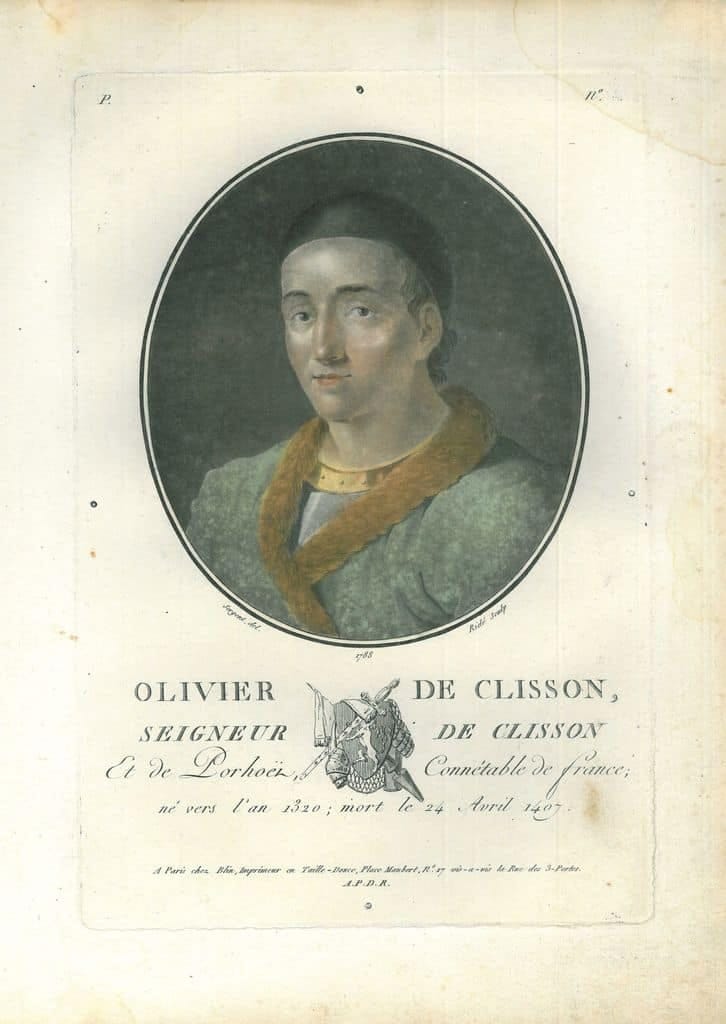
Olivier was a noble of grand stature, master of the imposing Château de Clisson—a fortress of massive granite towers that lowered over the river Sèvre—alongside rich manors in Nantes and wide stretches of Blain. In marrying, Jeanne brought her own vast holdings in Bas-Poitou to the union, fusing two great domains into a singular, formidable power along the Breton border. Within the warm, torchlit halls of Clisson and Nantes, five children were born to them: Isabeau, Maurice, young Olivier, Guillaume, and Jeanne. Theirs was a union not merely of lands, but of profound devotion, bound tight against the gathering storm of war.
When the Duke of Brittany died without a clear heir, the Duchy erupted into the Breton War of Succession. The House of Clisson aligned itself with Charles de Blois and King Philip VI of France, taking up arms against the English-backed candidate, John de Montfort. The siege of Vannes in 1342 brought ruin upon their house. Defensive commander Sir Olivier was captured by English forces. Yet, while his co-commander remained imprisoned, Olivier was released astonishingly fast, exchanged for the Earl of Stafford for a paltry sum of gold.
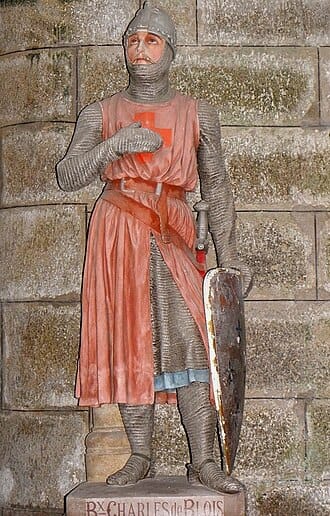
In the jealous, paranoid court of Paris, whispers grew into accusations. Charles de Blois branded Olivier a traitor, alleging he had bargained away the city to King Edward III.
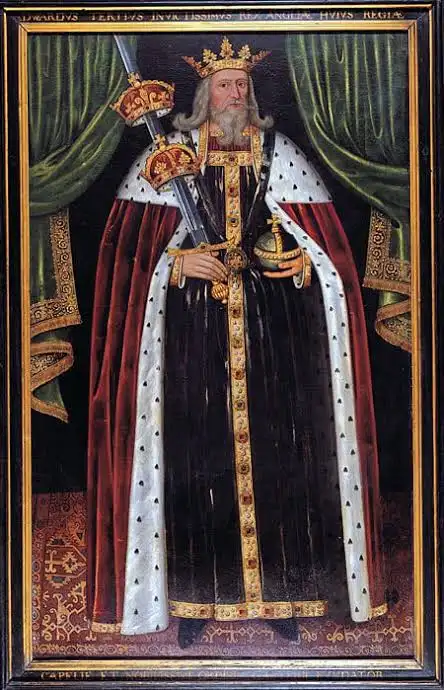
In January 1343, the Truce of Malestroit promised a fragile peace across the realm. Lured by royal assurances, Olivier and fifteen Breton lords rode to Paris to participate in a grand grand tournament hosted by King Philip VI. It was a net woven of velvet and iron. No sooner had the knights arrived than they were seized, cast into the damp cellars of the Châtelet, and subjected to a secret trial without public evidence or opportunity for defense.
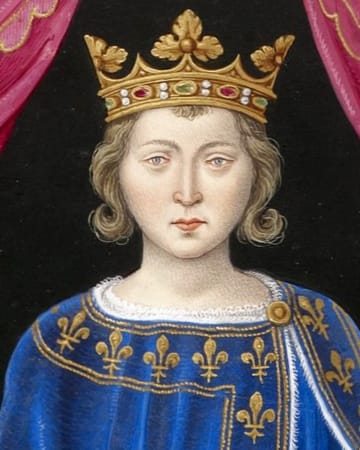
Jeanne fought furiously from afar to save her lord, attempting to bribe a royal sergeant to secure his release. But the King's judgment was swift and merciless.
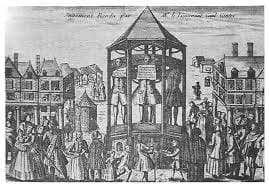
On Saturday, the second day of August, 1343, Olivier de Clisson was led through the noise and filth of Paris to the scaffold at Les Halles. Before the crowd, the executioner's blade severed his head. His bare torso was dragged to the high gibbet of Montfaucon to swing in the wind, while his severed head was packed in iron and sent westward to Nantes, where it was impaled upon a wooden lance atop the stone arches of the Sauvetout Gate—a ghastly warning to any who would defy the French Crown.
Word of the execution shattered Jeanne’s world, but grief was instantly consumed by a cold, white-hot fury. For her attempt to rescue her husband, Jeanne was charged with lèse-majesté, banished from the realm, and stripped of her estates. Defying the summons, she fled to Nantes with her young sons, Olivier and Guillaume.
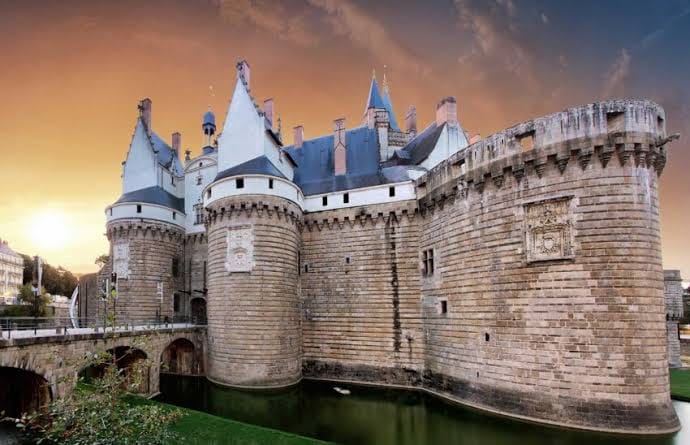
There, beneath the shadow of the Sauvetout Gate, she stood her children before the rotting features of their father pinned high above the archway. In the cold damp of the Breton morning, she made them look upon the gruesome sight and swear an oath of vengeance against King Philip VI and Charles de Blois.
Selling her remaining jewelry, furniture, and family heirlooms, Jeanne raised a force of four hundred men loyal to the memory of Clisson. She struck first by land, targeting French strongholds scattered through the countryside.
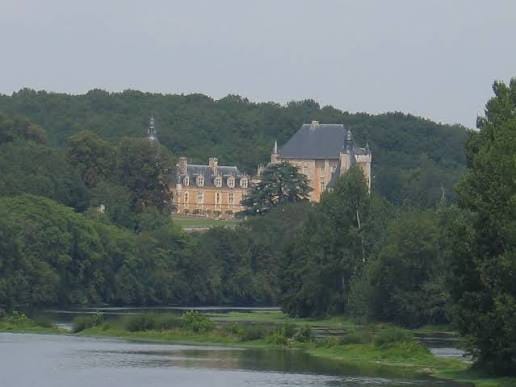
Her target was the castle of Touffou, near the forest of Bignon. The fortress was commanded by Galois de la Heuse, an officer of Charles de Blois who recognized Jeanne and opened the heavy timber gates to her force without suspicion. Once inside, Jeanne's men drew their swords and slaughtered the entire garrison. True to the dark ritual she would maintain for years, Jeanne spared a single soldier, sending him bleeding into the night to report to the French King that the widow of Clisson had begun her work.
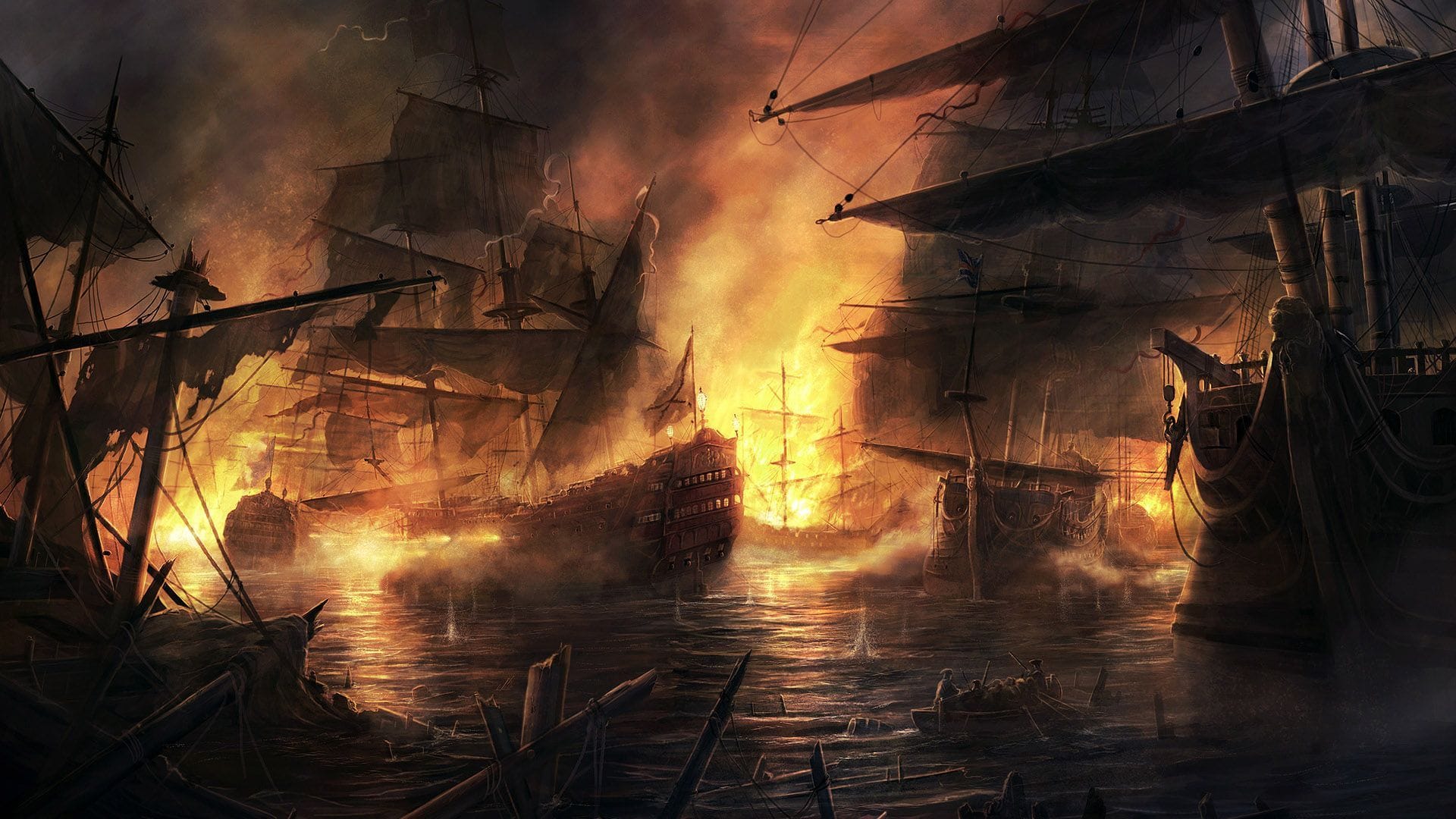
Realizing that the crown’s armies would soon surround her on land, Jeanne turned her eyes toward the open water. Armed with gold from sold lands and bolstered by English support, she purchased and retrofitted three heavy merchant cogs—flat-bottomed, high-sided warships designed for brutal, close-quarters boarding.
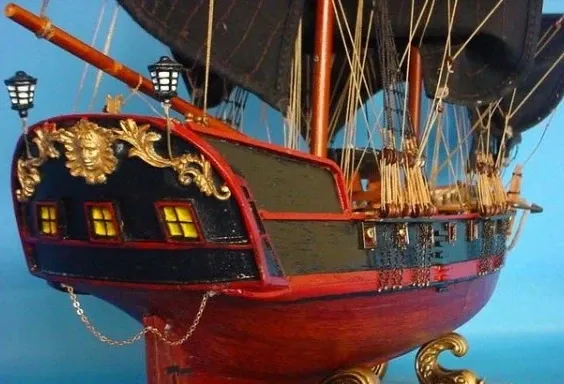
She ordered their hulls painted as black as pitch and their broad canvas sails dyed deep crimson. At the head of this dark squadron sailed her flagship, named with terrible clarity: My Revenge.
For years, the "Lioness of Brittany" terrorized French shipping in the Bay of Biscay and across the narrow, treacherous waters of the English Channel. Utilizing the rocky islands of Ǐle d'Yeu and the dangerous currents of Pointe du Raz for ambushes, her fleet hunted down French merchantmen and military transports.
When a ship was cornered, Jeanne’s crew would throw grappling irons, board the vessel with crossbows, broadswords, and daggers, and cut down every aristocrat and sailor on board. Jeanne herself led the boarding parties, often wielding an axe upon the deck. True to her oath, she consistently left a single, terrified sailor alive on every captured vessel, forcing him to swim or row to shore to tell King Philip that the Lioness had claimed her toll.
For over a decade, Jeanne de Clisson ruled the waves as an unstoppable phantom of retribution. The seas ran red along the French coast until the fire of her vengeance finally burned down to embers.
Having exacted a terrible price from the kingdom that murdered her husband, Jeanne eventually anchored her ships for the last time. She wed Sir Walter Bentley, an English knight who had served as a deputy to King Edward III in Brittany. Retiring from the sea, she spent her final years in the coastal town of Hennebont under the protection of the Duchy of Brittany.
In 1359, Jeanne de Clisson died peacefully at the age of fifty-nine. She left behind a legacy etched in salt, iron, and blood—a noblewoman turned maritime terror, remembered throughout history as the formidable Lioness of Brittany.